
21 wade ave, unit 2, toronto
Marigold Santos | Epiphytic Elucidations | 17 jan – 28 Feb, 2026
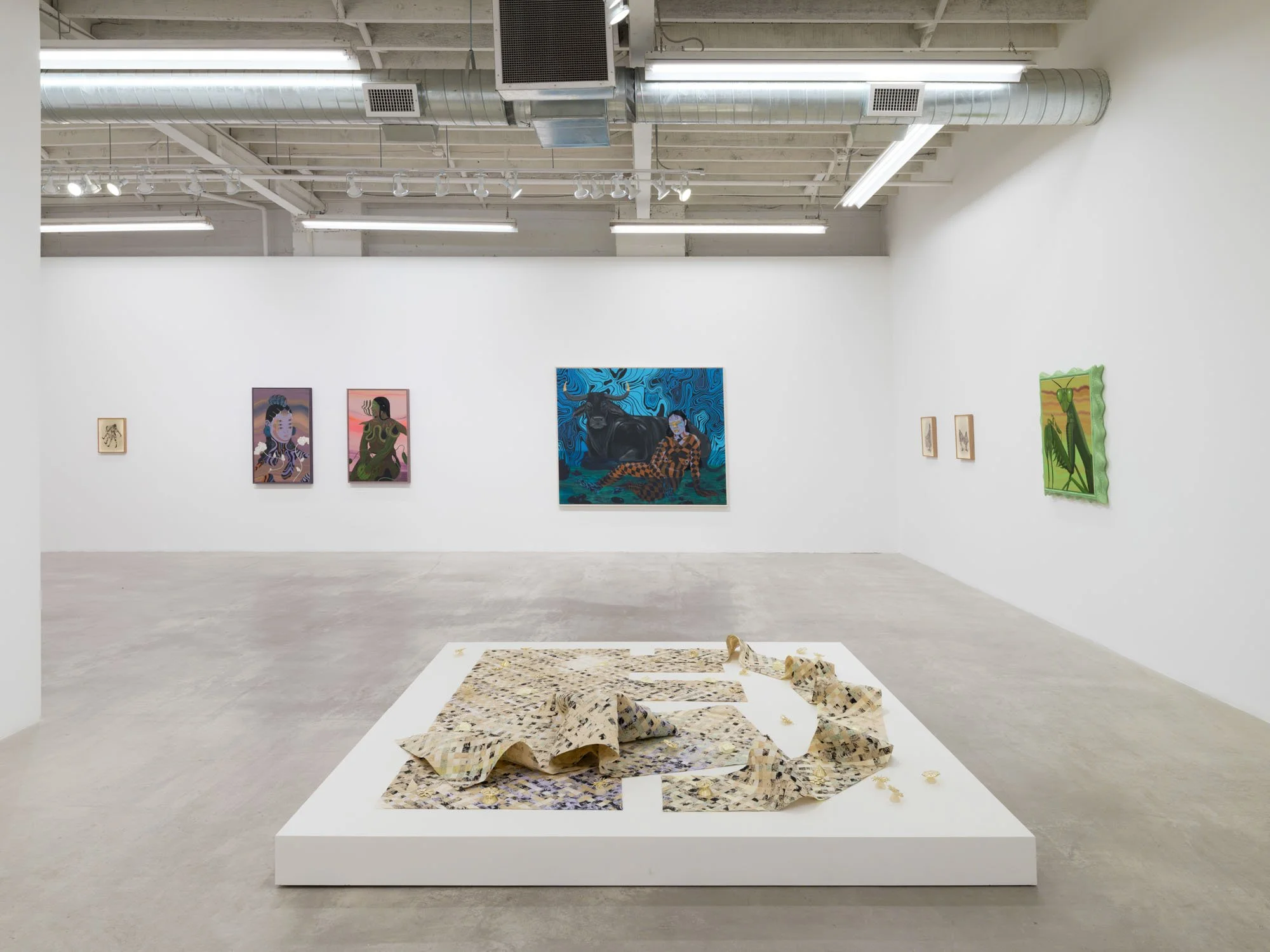
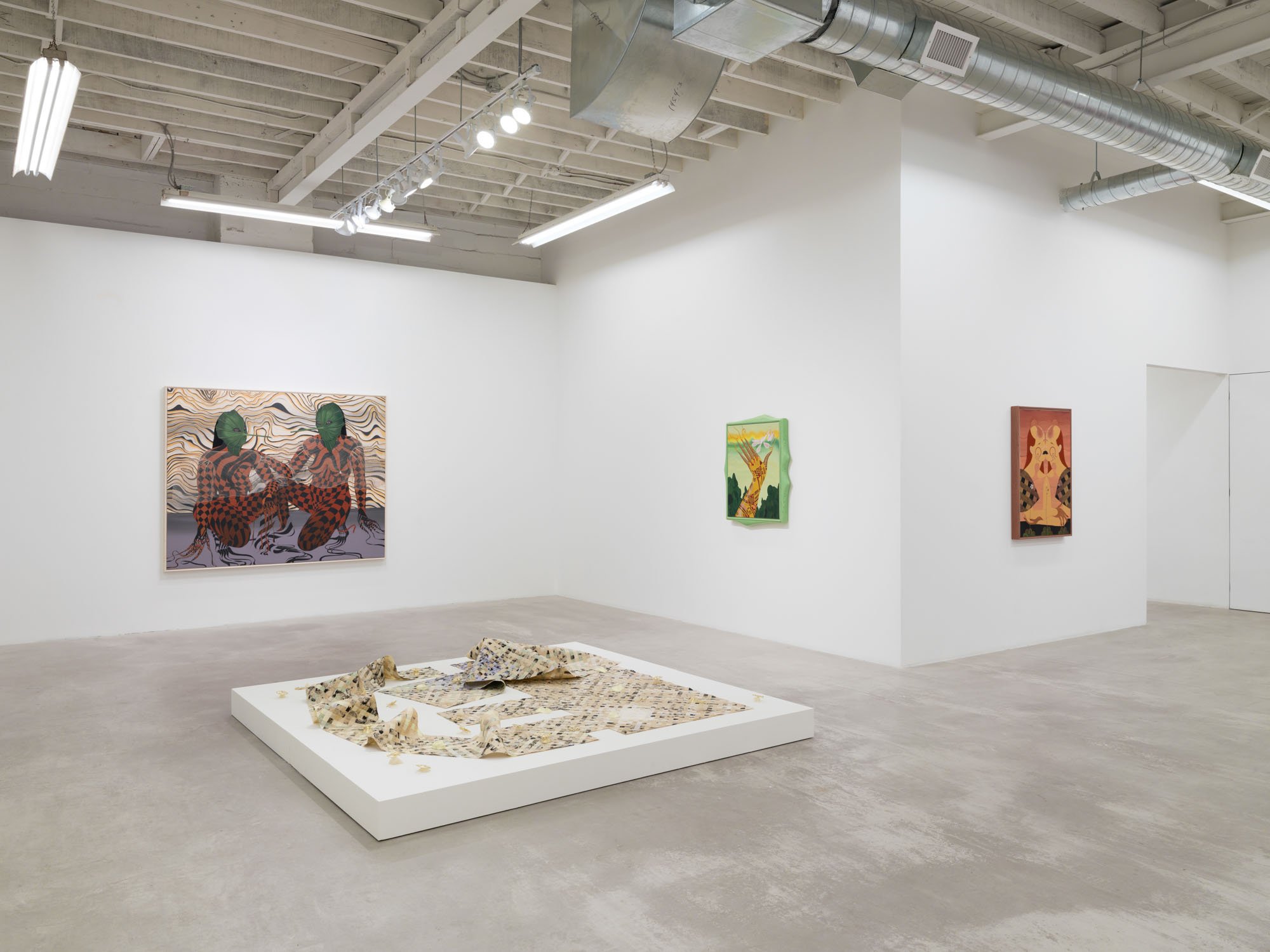
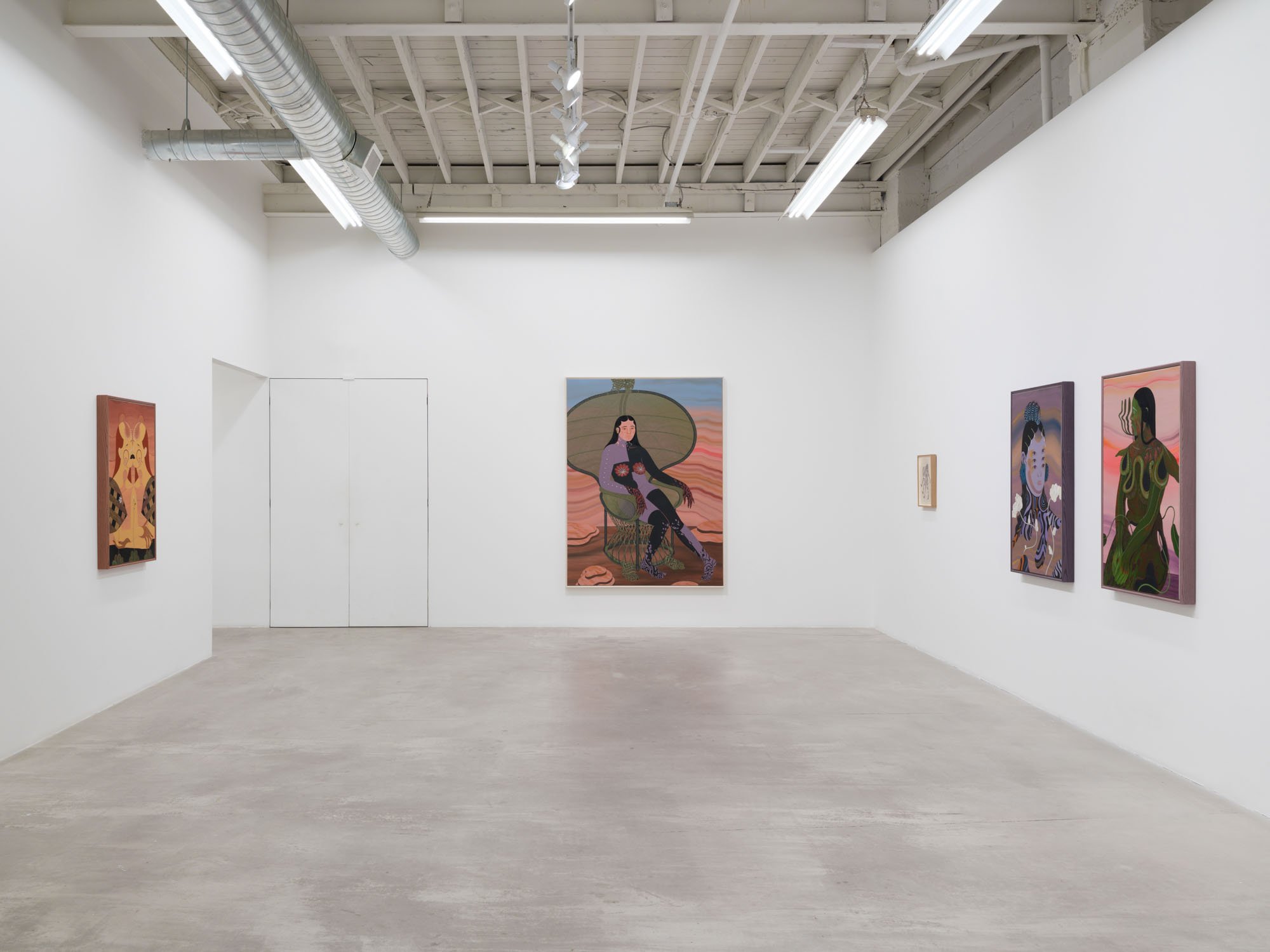
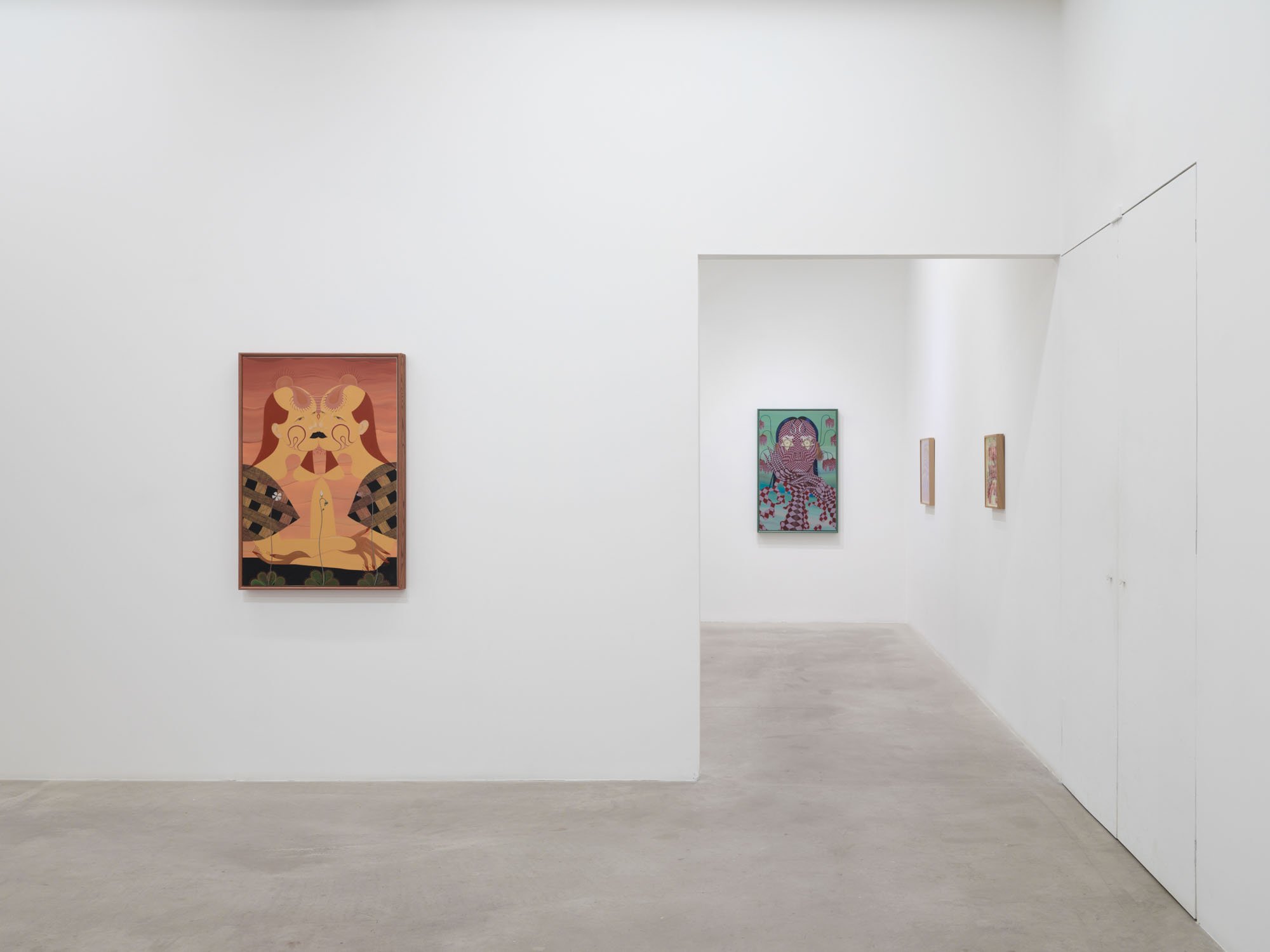
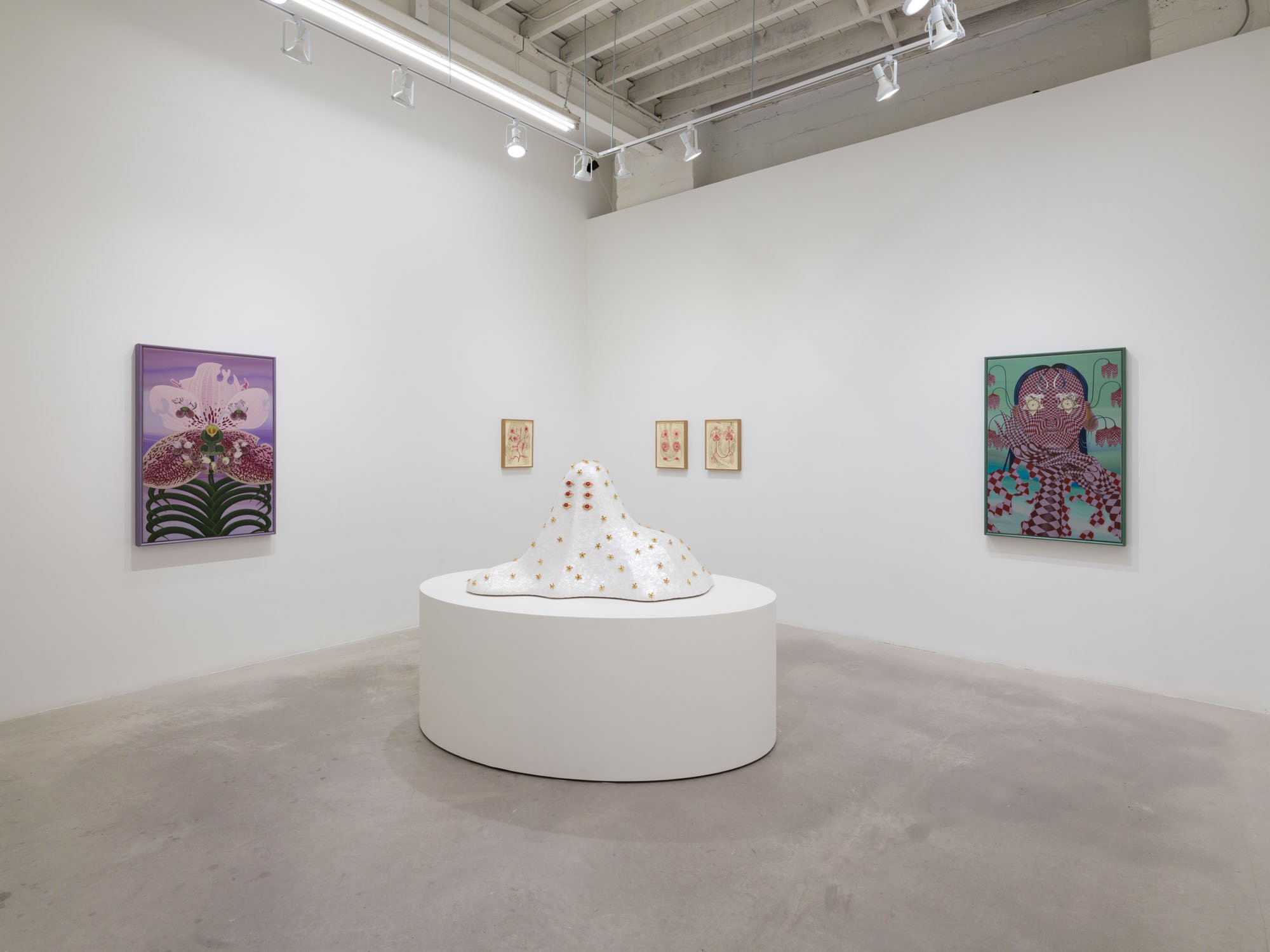
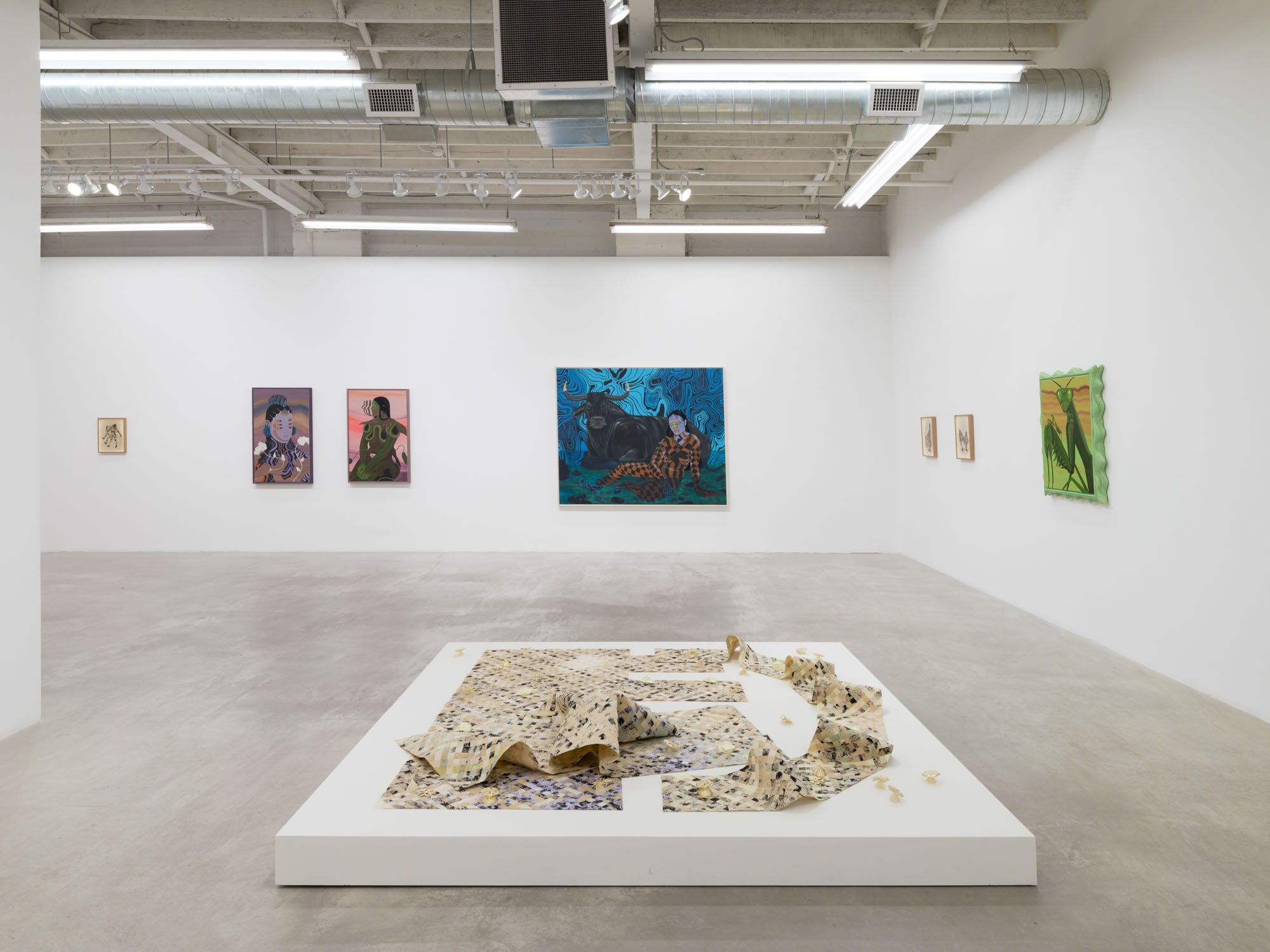
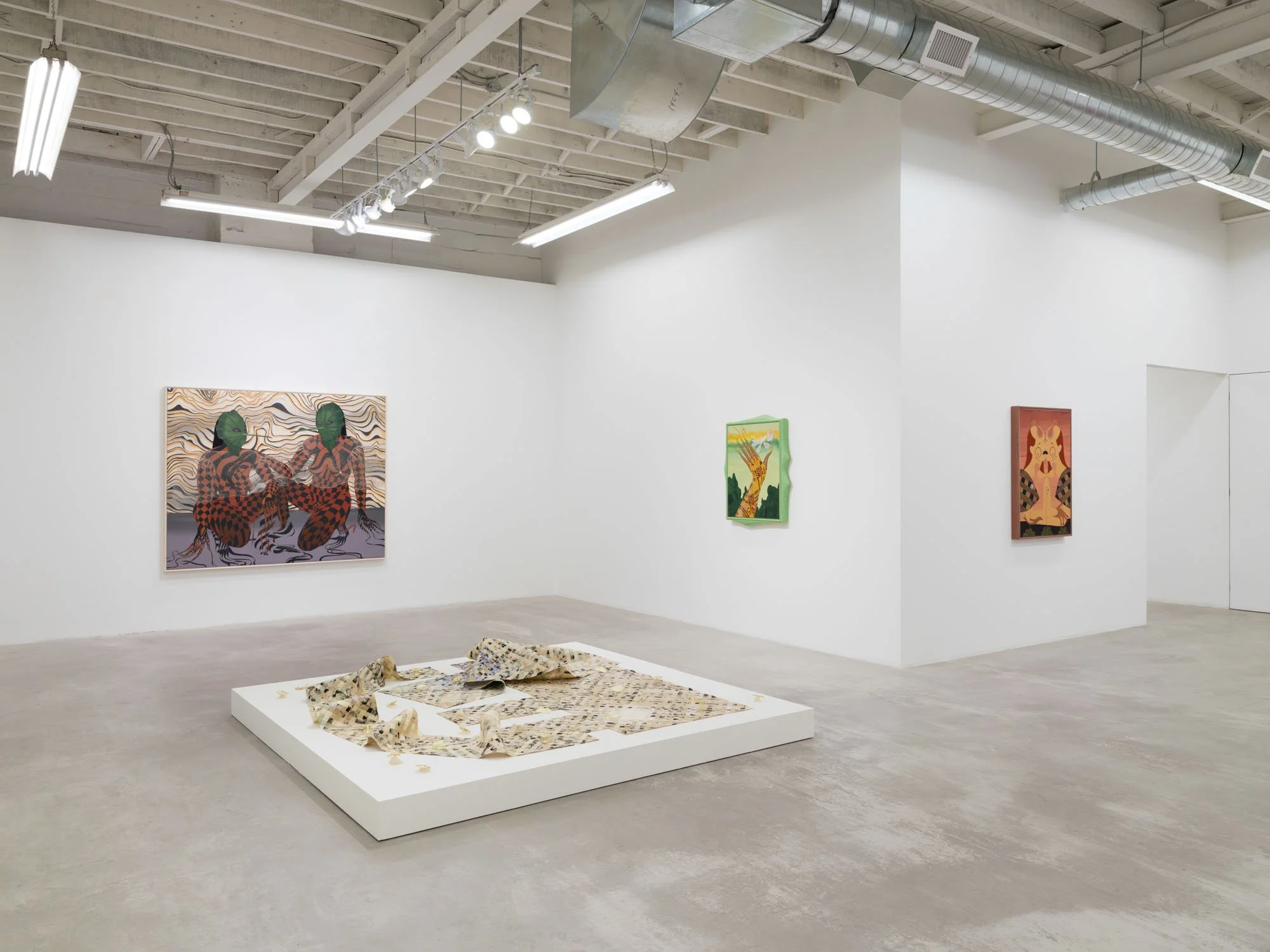
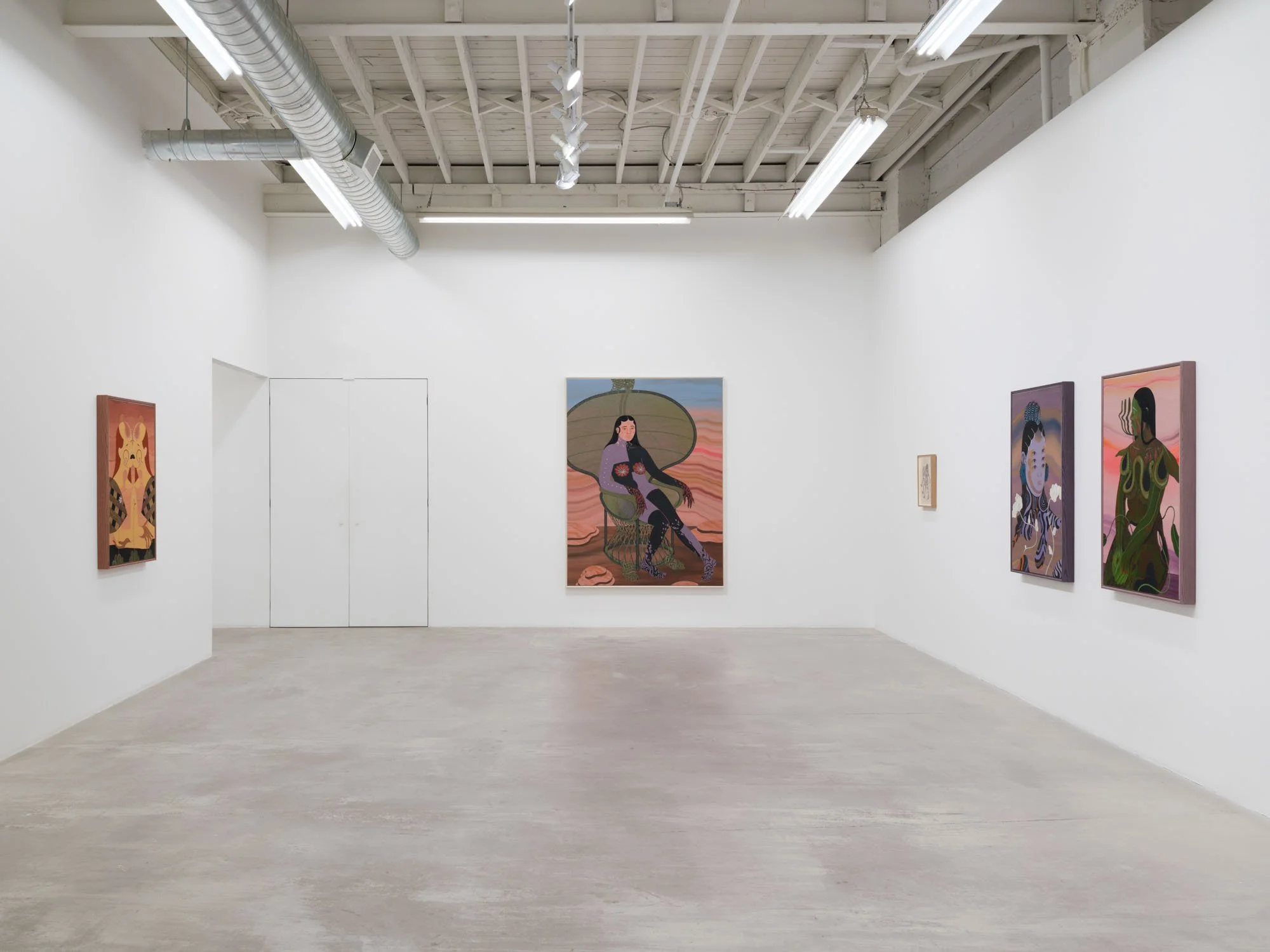
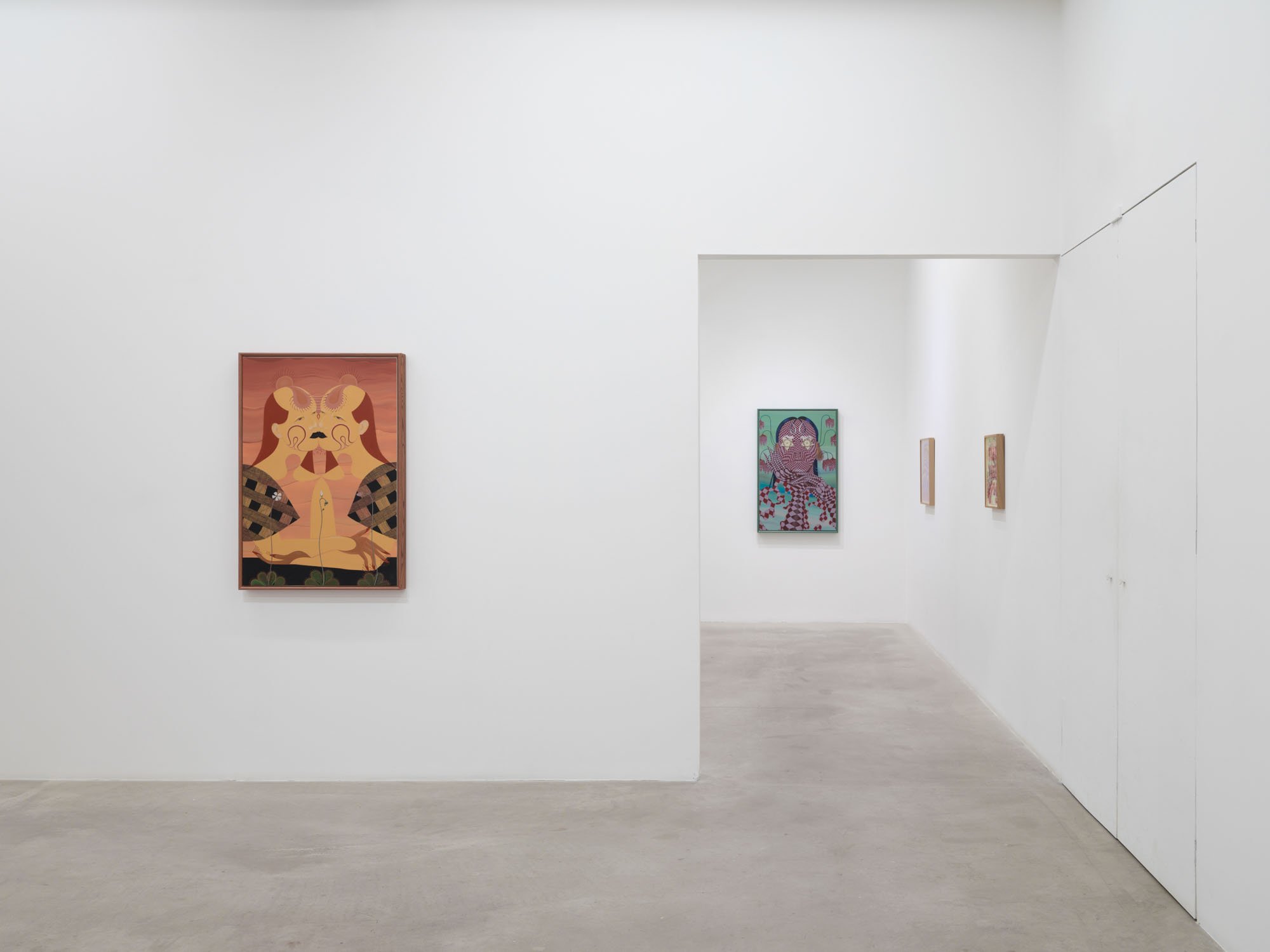
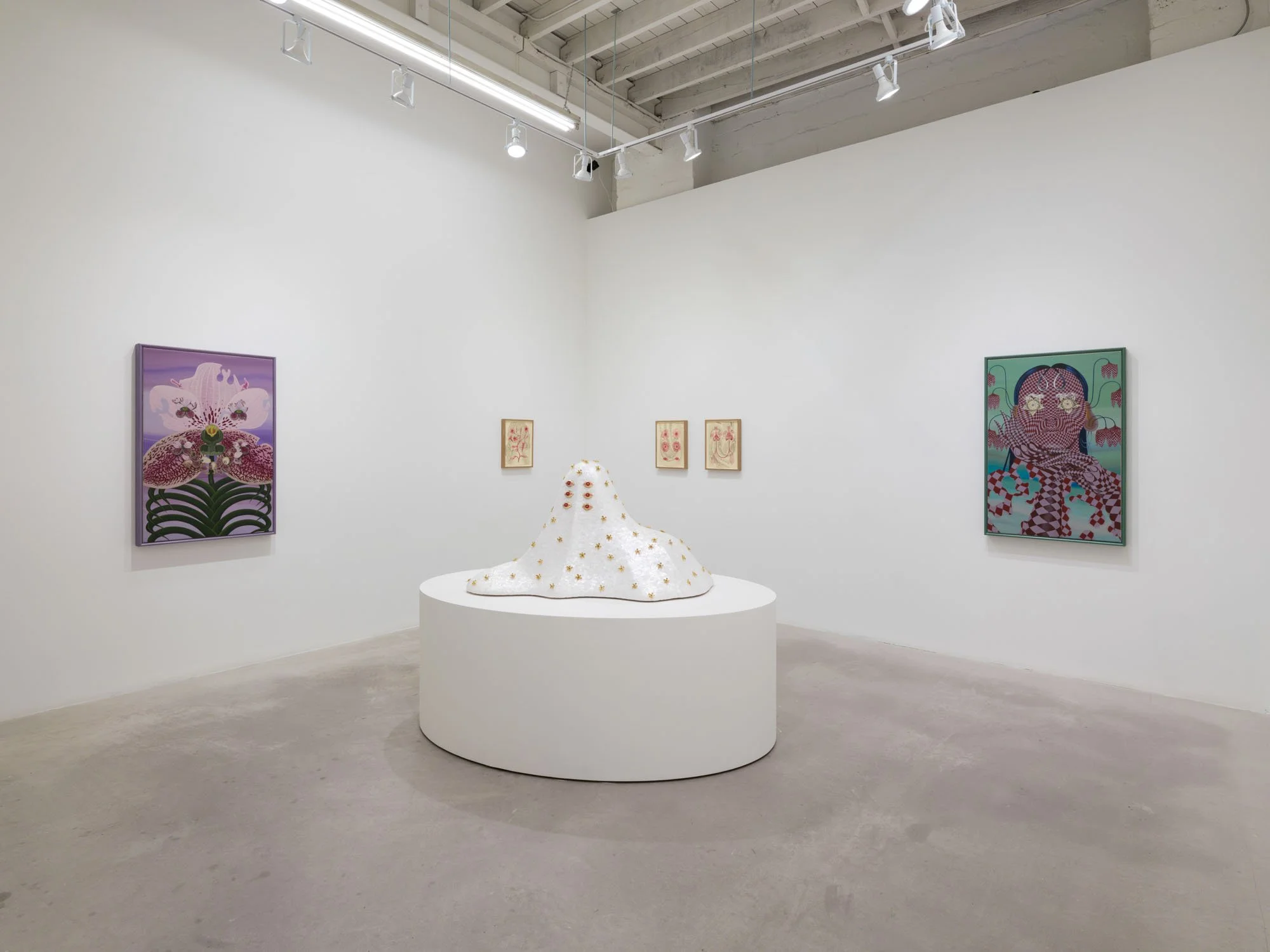
Before the artist had her child, I shared with her that mothering was the hardest thing I had ever done in my life. Mothering is intense, and through this labour, one is transformed. A mother is forged in ways that are not only physical, but deeply spiritual and creative. Mas malakas tayo dahil mag-ina tayo. We are stronger because we are mothers.This sense of labour and transformation pulsates throughout Marigold Santos’ new work.
In her art, I find echoes of my own journey—the negotiation of identity, the sacred weight of heritage, and the fierce creativity that emerges from these thresholds. Her solo exhibition at Patel Brown, Epiphytic Elucidations draws on her lived experience and ancestral channeling. As the mother, diasporic subject, and artist, Santos highlights the ways in which ancestral labour continues to sustain the present through relations entwined in ecology and kinship.
The title Epiphytic Elucidations gestures toward modes of existence rooted in interdependence. Neither parasitic nor extractive, epiphytes exist through balance and proximity. Like epiphytic plants that grow alongside others for support, the works suggest that contemporary identities and diasporic ways of living are sustained through ancestral knowledge and labour. waling waling walang hiya (2025) and shroud sitter (nepenthes nurture) (2025) delicately render epiphytic orchids and pitcher plants, which practice a gentle coexistence with their hosts. Like epiphytic plants, people in the diaspora learn to live without fully rooting. We settle onto new structures as a form of survival, sustained by a deep well of inherited memories, familial traditions, and stories passed down from those who came before us.
---
The themes of mutual support, labour, mothering, and ancestral materiality are exquisitely portrayed in shroud (kalabaw and death mask) (2025). This work centers on two figures: the kalabaw [1] and a human-like figure adorned with a death mask. Though different, the painting reveals them as mirrors of one another—coexisting in quiet harmony. They are in symbiosis, akin to epiphytic plants that grow upon a host without sowing harm. This mutuality is both an ecological reality and a metaphor for the Filipinx diaspora: a sacred entanglement. By collapsing the boundaries between life and death, Santos weaves together themes of humanity’s deep-rooted interconnectedness with nature and ancestry.
The kalabaw, the national animal of the Philippines, symbolizes strength and labour. Long associated with rice farming, it embodies endurance and perseverance. Larger in scale, she stands partially submerged in water, meeting the viewer’s gaze. Santos recalls the kalabaw as a maternal figure, drawing on a childhood memory of drinking her milk. This intimate recollection unveils the often-overlooked forms of labour tied to motherhood. The mother, like the kalabaw, is patient, enduring, and steadfast. The kalabaw bears the weight of the land, pulling through mud and rain, carving furrows so life can grow. In the same way, a mother carries the weight of generations, labouring through exhaustion and pain to nurture new life. Both acts are quiet, yet monumental, rooted in strength that is often unseen, but essential for survival and continuity. Here, the kalabaw becomes a powerful symbol of maternal care.
The touches of gold adorning its horns and in the death mask are whispers of relics from the precolonial era. The figure, whose body is covered with a patterned motif reminiscent of traditional Filipino weaving, is concealed by a gold death mask—an ancient funerary object meant to protect the deceased in the afterlife. Santos was awestruck by the traditional Philippine gold artistry when she visited the Gold of Ancestors [2] exhibition at the Ayala Museum in Makati City. Spanish colonizers stole much of the gold of the Philippines to fund their Christianizing missions, making the artist’s gleaming assertion a defiance of this theft, proposing that this artistic labour will endure across generations and beyond colonial erasure.
---
For Santos, our ancestors extend into the ocean. On a recent trip to the Philippines, Santos and her family went out into the ocean on a bangka [3] off the sands of Puerto Galera. It was there where the artist laid her eyes on giant clams, some of which are over a century old. As she treaded water above them, Santos wondered: what have these clams witnessed over their lifetime from the depths of the ocean? What histories, silences, and shifting tides have passed over their shells? What pearls of wisdom were formed within their flesh. What truths can they share with us? Floating in the Philippine oceans with this sense of awe produced a liminality, a suspension among temporalities—among the weight of ancestral memory, the hardness of the present, and the fluidity of the future.
Our aquatic ancestors teach us time’s expansiveness, awe for the natural world, and the limits of human knowing. Santos reveals this in nacre (2025), which navigates the work of witnessing and remembrance, much like the ocean’s surface—where what is visible conceals vast depths below. It is a capiz shell [4] sculpture that forms an amorphic creature. The work is the culmination of a quiet, yet extensive labour, combining natural elements and folkloric references. In this work, labour precedes the act of shaping itself, embedded in the material long before it takes form. Each shell must first be carefully cleaned and treated with acid to make it malleable. The shells are harvested either by hand along shallow, muddy shores or by diving into deeper waters, carrying the traces of the effort and care that shape the final piece.
The sculpture’s form alludes to an asuang-like figure [5] and is punctuated by six brass eyes. These eyes appear bloodshot, a recurring motif that is also present in sibling shroud (lotus and balintawak) (2025) and shroud epiphyte (bilibid chair) (2025). In these works, the bloodshot gaze conveys beauty forged through endurance. As with the brass sampaguita [6] of nacre (2025), the artist transforms natural elements into adornment, strengthening the threads that tether us to Mother Nature.
---
shroud epiphyte (bilibid chair) (2025) draws from a 1914 photograph by Charles E. Doty of an incarcerated Filipina mother seated on a peacock chair within Bilibid Prison in Manila. [7] Once a marker of power and privilege, the chair’s intricately woven rattan body carries a heavier history. Its form, which was later admired and found in the homes of middle-class Americans, is the product of imprisoned artisans. Also known as the Bilibid chair, the peacock chair holds the weight of colonial incarceration and coerced labour. It becomes a vessel of layered memory: of motherhood under surveillance and of bodies restrained yet still creating. Entangled between these notions of care and captivity, the chair bears witness to how labour and survival continue to echo through material form. In this work, the figure stands as the epiphyte, and the peacock chair as the host plant, both cloaking a shadowed history of labour exploitation under refined, yet forced, craftsmanship.
Many Filipino/a/x parents in the diaspora feel an ocean of obligation to pass on to our children what little we know—but deeply love—about our culture that has been distanced from us through tides of conquest and migration. As inheritors, we carry the memories of our kin, both human and nonhuman, who have endured--and continue to endure--chains of empire, storms of invasion, tides of deprivation, and tempests untamed. This is not to invoke the tired discourse of resilience, but rather to acknowledge that the babaylanes [8] of the diaspora—of which Marigold Santos stands among — live today because of the strength and vision of those who came before. The babaylanes hold the sacred duty to pass on these fierce legacies and nature’s enduring lessons to our anak [9] , ensuring that this vitality continues into the unfolding horizon.
Santos’ work resonates deeply with this calling. Her practice explores fragmentation, multiplicity, and the reconstitution of identity—concepts that mirror the diasporic experience and the sacred labour of cultural transmission and transformation. Santos creates spaces where ancestral memory and contemporary selfhood converge, offering a visual language for the complexities of belonging and becoming. Envisioning intergenerational strength and continuity, Epiphytic Elucidations is an inheritance of harmony for the heirs of tomorrow.
–Exhibition text by Chloe Panaligan & Marissa Largo
Notes: [1] Also known as a carabao or water buffalo. [2] This exhibition presents over a thousand pre-colonial gold artifacts dating back to the 10th century. [3] Tagalog word for “boat”; A traditional canoe which was crucial for life among the more than seven thousand islands of the Philippines. [4] Capiz shell, a ubiquitous material in Philippine culture, comes from the placuna placenta, commonly known as the windowpane oyster. [5] The asuang is a fearsome figure in Philippine folklore. Originally the medicine practitioner in Indigenous socieites known as the babaylan, the asuang is the result of a colonial inversion. Santos mobilizes the asuang and their precolonial origins as a symbol of cultural hybridity and transformation throughout her oeuvre. [6] Sampaguita is a white flower found in Southeast Asia and is the national flower of the Philippines. [7] See Alejandro Aceirto’s 2025 Hyperallergic article, “Trancing the Peacock Chair’s History From Manila to Nashville”. [8] The babaylan (plural babaylanes) were the precolonial spiritual leaders, healers, and ritual specialists, often women or gender fluid leaders in communities. Babaylanes were custodians of cultural knowledge, mediators between the physical and spiritual worlds, and played central roles in resistance movements during Spanish colonization. They were vilified by Catholic missionaries and became in inverse: the asuang, a vampiric ghoul of Philippine folklore. Throughout her practice, Santos reclaims the asuang as diasporic transformation and feminist power (See Largo 2012 and 2018 for more). [9] “Children” in Tagalog.
Marigold Santos was born in the Philippines, and immigrated with her family to Canada in 1988. She pursues an inter-disciplinary art practice that examines diasporic lived experience and storytelling, presented within the otherworldly. She holds a BFA from the University of Calgary, and an MFA from Concordia University. As a recipient of grants from the Canada Council for the Arts, the Alberta Foundation for the Arts, and the Conseil des Arts et des Lettres du Québec, she continues to exhibit widely across Canada. Her recent solo exhibitions include SURFACE TETHER at the Art Gallery of Alberta (2019) MALAGINTO at Montréal, Arts Interculturels (MAI) and the Dunlop Art Gallery in Regina (2019), the pace and rhythm of time, floating at The Southern Alberta Art Gallery (SAAG) and Patel Brown, Toronto (2023). In 2023, she was longlisted for the Sobey Art Award. Santos maintains an active studio practice and resides in Treaty 7 Territory, in Mohkinstsis/Calgary. Her most recent travelling duo exhibition with Rajni Perera, Efflorescence / The Way We Wake, was presented at the PHI Foundation in Montréal (2024), Contemporary Calgary (2024), and the Musée d’art contemporain de Lyon, Lyon, France (2025).
Dr. Marissa Largo is an award-winning researcher, curator, and art educator whose work focuses on the intersections of community engagement, race, gender, and Asian diasporic cultural production. Her forthcoming book, Unsettling Imaginaries: Filipinx Contemporary Artists in Canada (McGill Queen University Press) examines the work and oral histories of artists, like Marigold Santos, who reimagine Filipinx subjectivity. She is co-editor of Diasporic Intimacies: Queer Filipinos and Canadian Imaginaries (Northwestern University Press 2017) and is the Canada Area Editor of the journal of Asian Diasporic Visual Cultures and the Americas (ADVA). Largo is an Assistant Professor of Creative Technologies at York University where she also serves as the Graduate Program Director of Art History & Visual Culture, and Visual Arts.
Chloe Panaligan (she/her) is an emerging writer and researcher based in Tkaronto /Toronto. She is currently working toward an MA in Art History and Visual Culture at York University, where her research explores the works of contemporary Filipinx diasporic artists, notions of Filipinx futurities, the significance of the quotidian, and intersections of the colonial, religious faith, and queerness.