
21 WADE AVE #2 | TORONTO
SHEllie Zhang | Surface Tension | 2 May – 20 June 2026
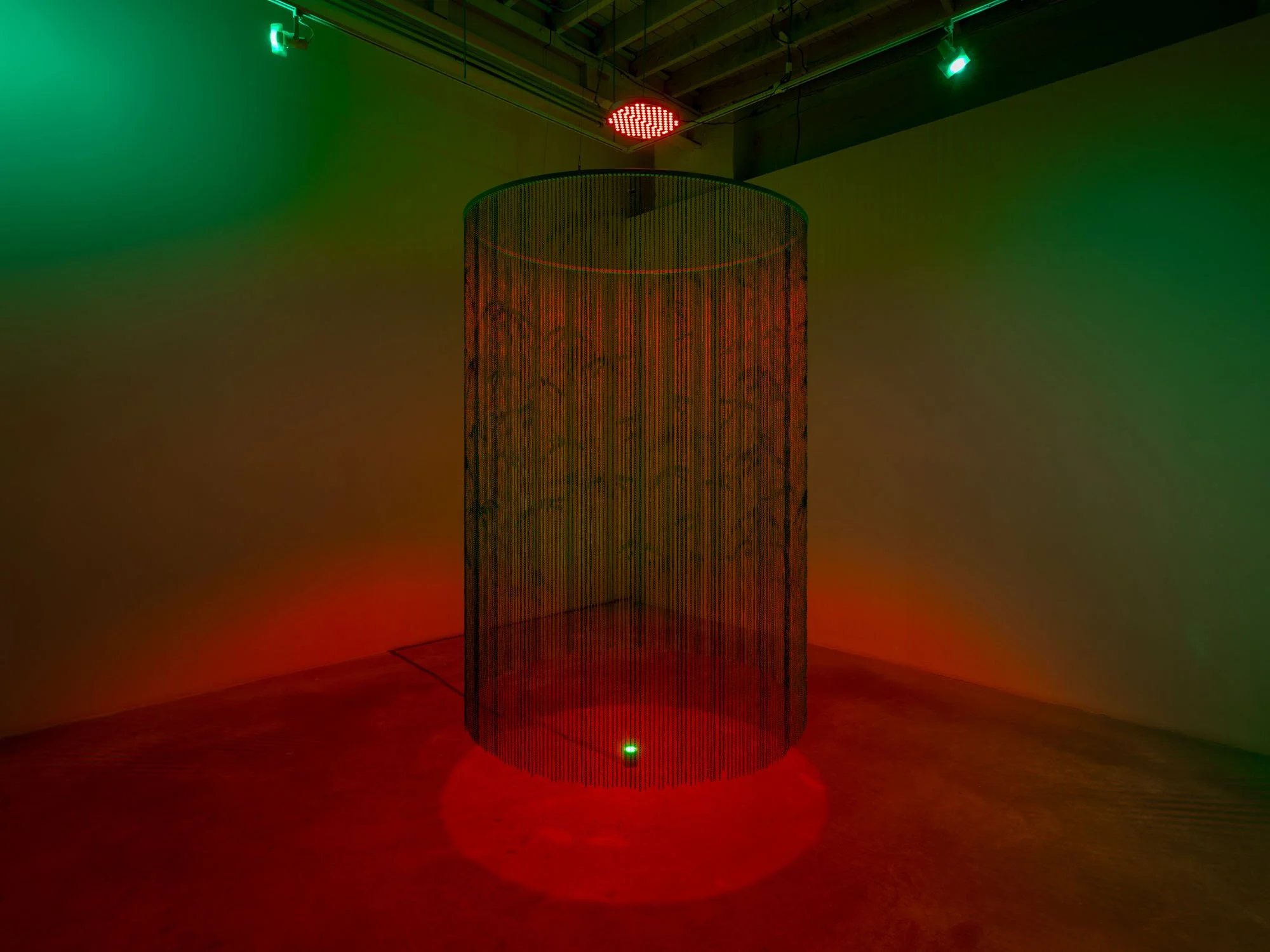
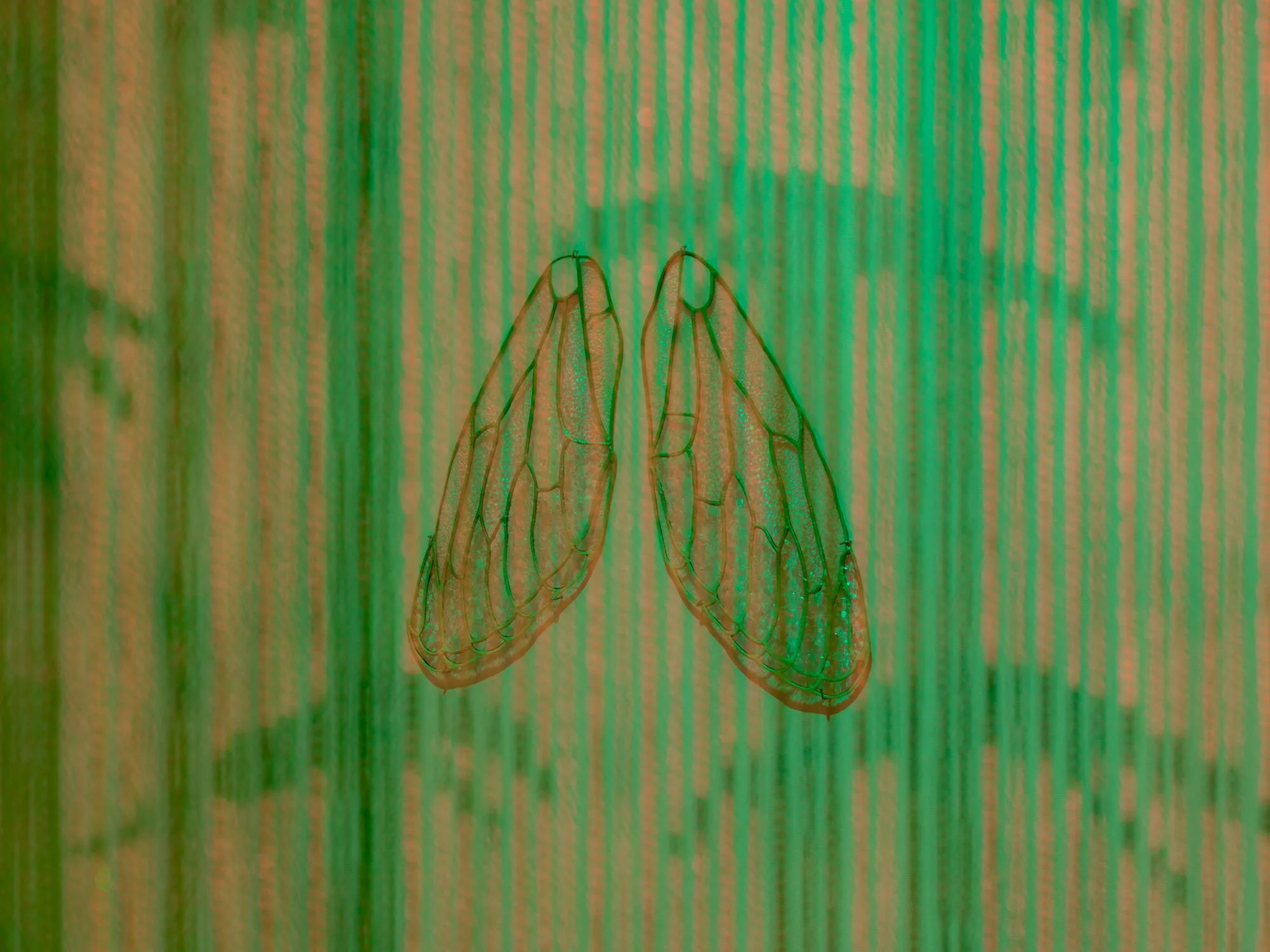
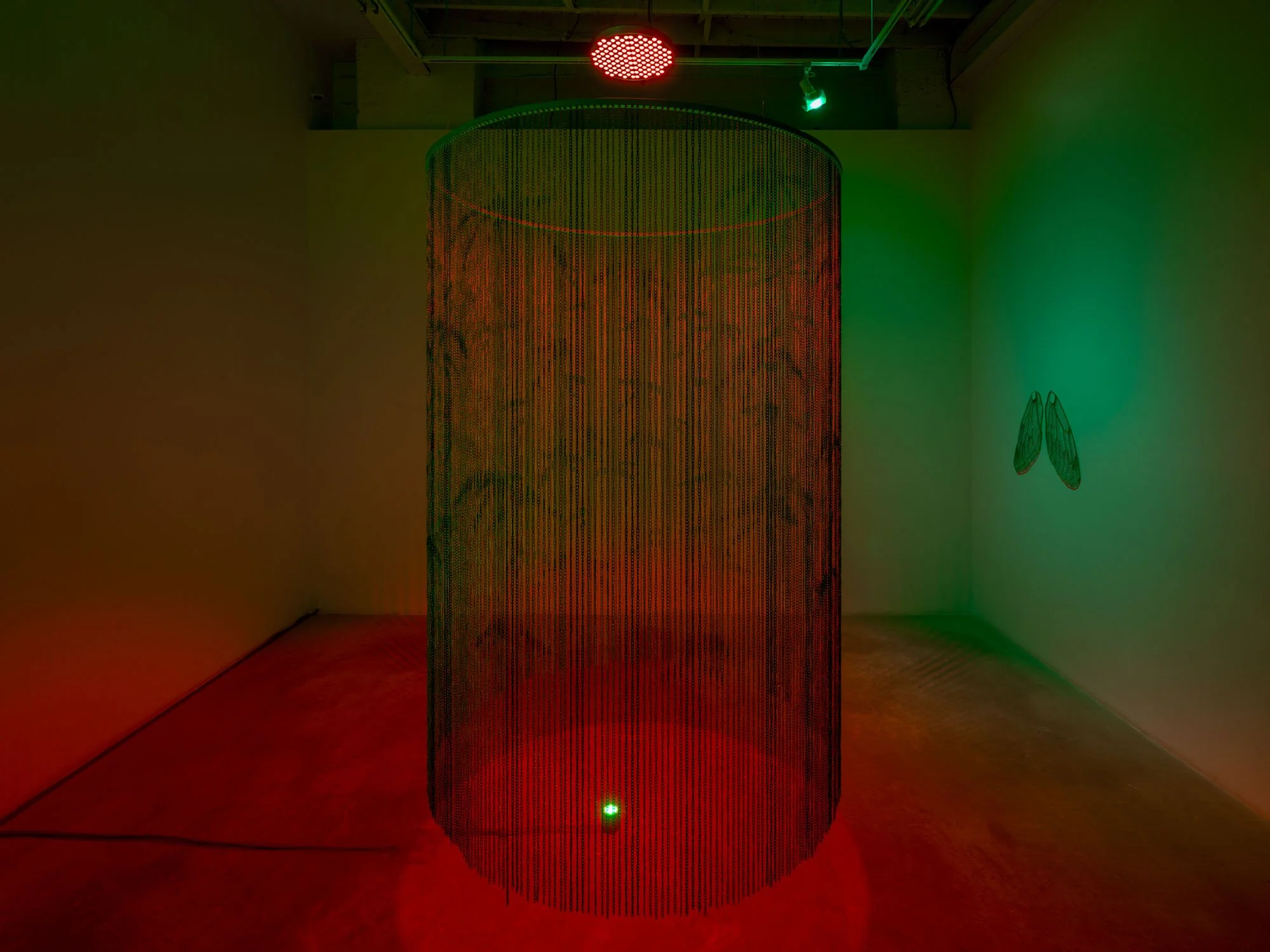
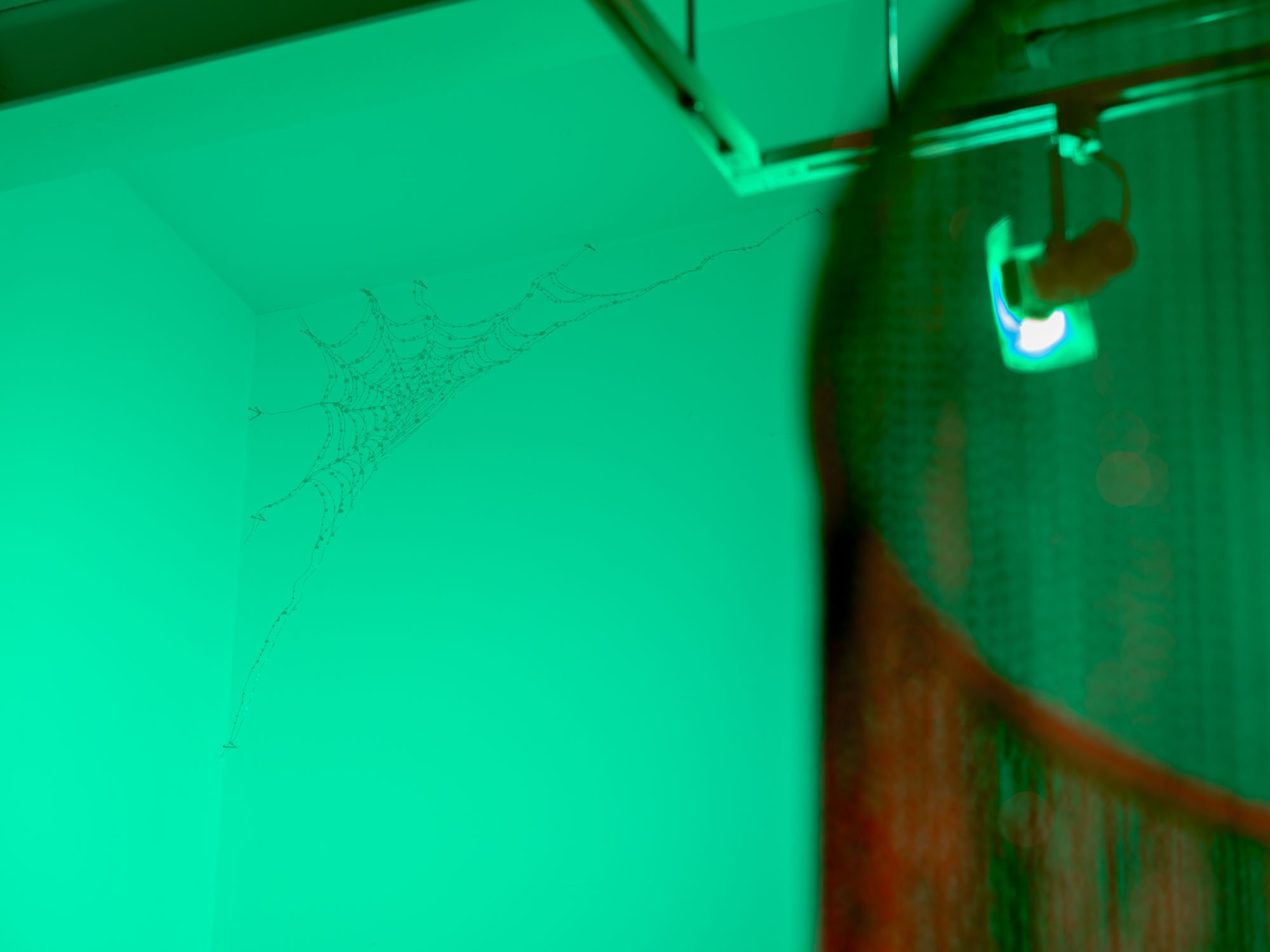
The three works in Surface Tension explore Shellie Zhang’s research into the interconnections between cinematic surfaces, ornamentation, and skin. Drawing on symbols from the natural world, Zhang examines how decorative surfaces— laden with anxieties around gender, race, and sexuality beneath their ornate aesthetics—carry the potential to transform and metamorphose from their encrusted histories.
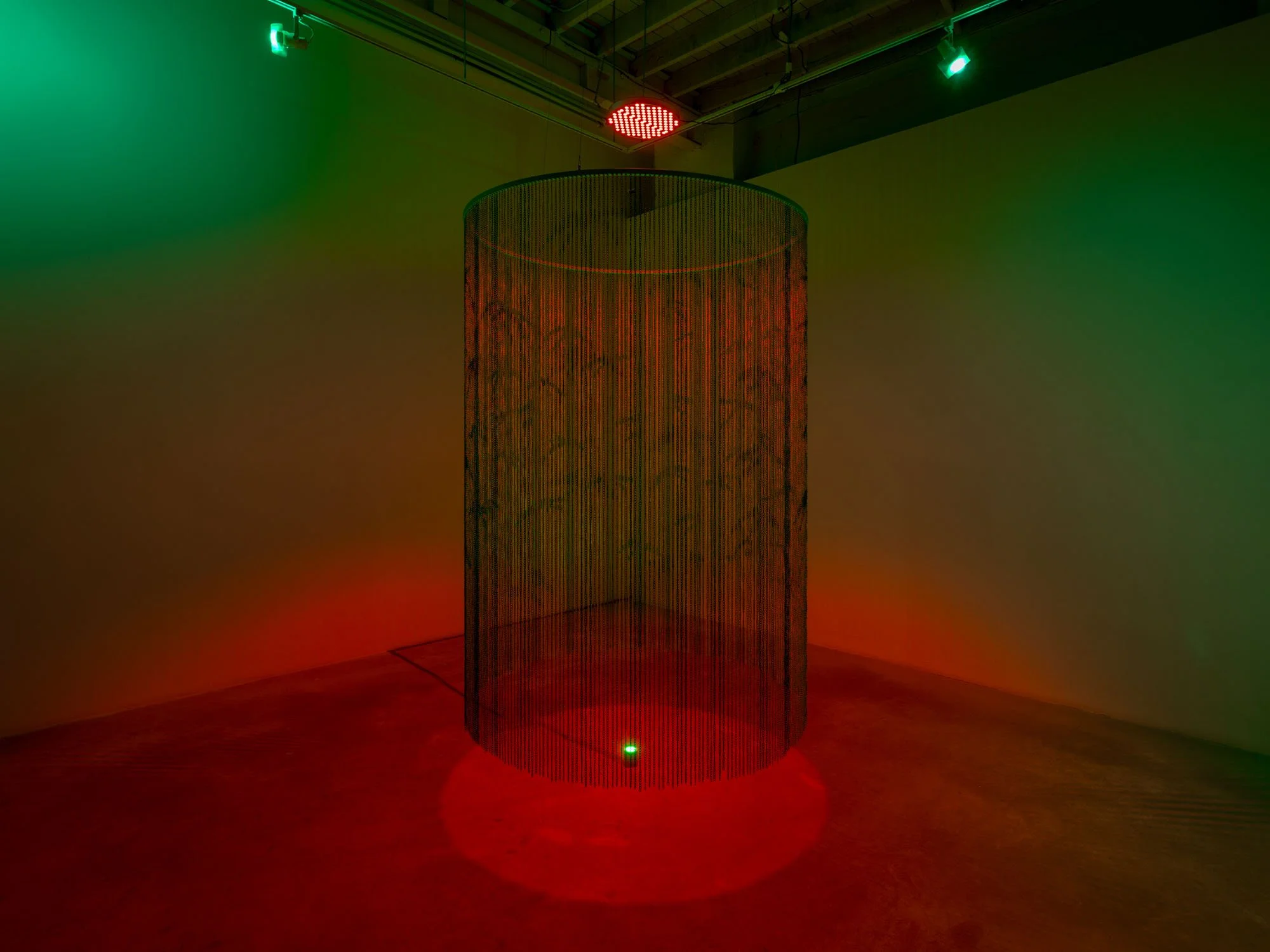
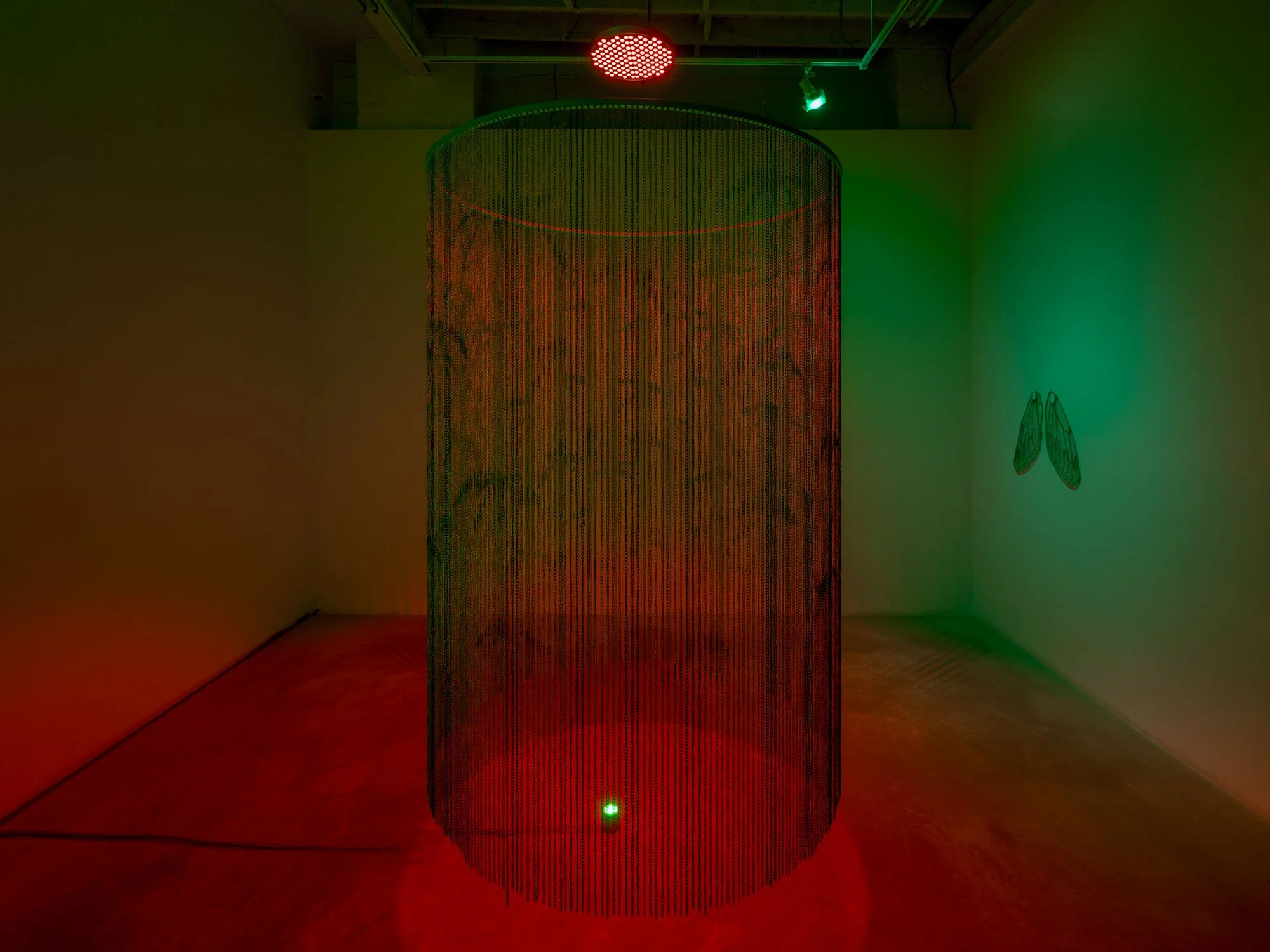
Bamboo Canopy engages with Zhang’s exploration of the visual and physical spread of the bamboo plant. Bamboo was first introduced to North America in 1882 as an ornamental plant; as it spread, it came to be classified as invasive. Zhang engages with bamboo as a metaphor for how othered bodies are perceived as both ornamental and threatening—simultaneously aestheticized and feared. The work draws inspiration from films such as A Touch of Zen (1971), Crouching Tiger, Hidden Dragon (2000), and House of Flying Daggers (2004), each featuring a climactic scene set within a constructed bamboo forest. These stylized, highly choreographed film settings function as both backdrop and symbol—sites of transformation and tension. The work reflects on the afterlife of East Asian decorative motifs in film, and in the selected pieces, frame bamboo not as markers of otherness, but as sites of continual transformation. Within the installation, a chain-linked curtain produces a moiré effect, allowing viewers to see the forest first and the exterior second, suggesting a layered interiority. In Bamboo Canopy, an ominous red LED light hangs above while green light emanates from a bamboo ash container below. The viewer is positioned within the forest canopy, suspended between two contrasting illuminations: the red light associated with skin regeneration and transformation, and the green light evoking renewal and resurrection.
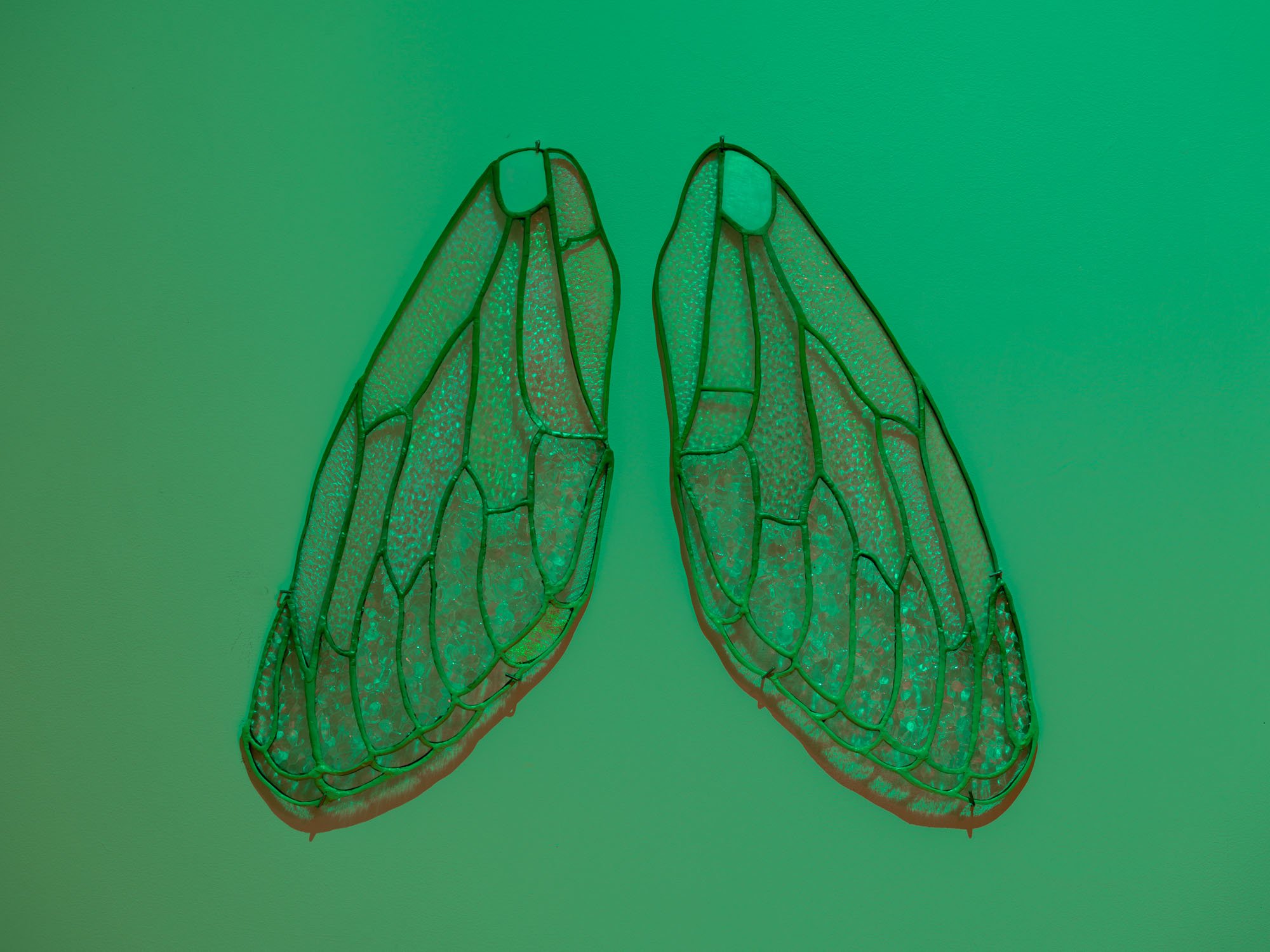
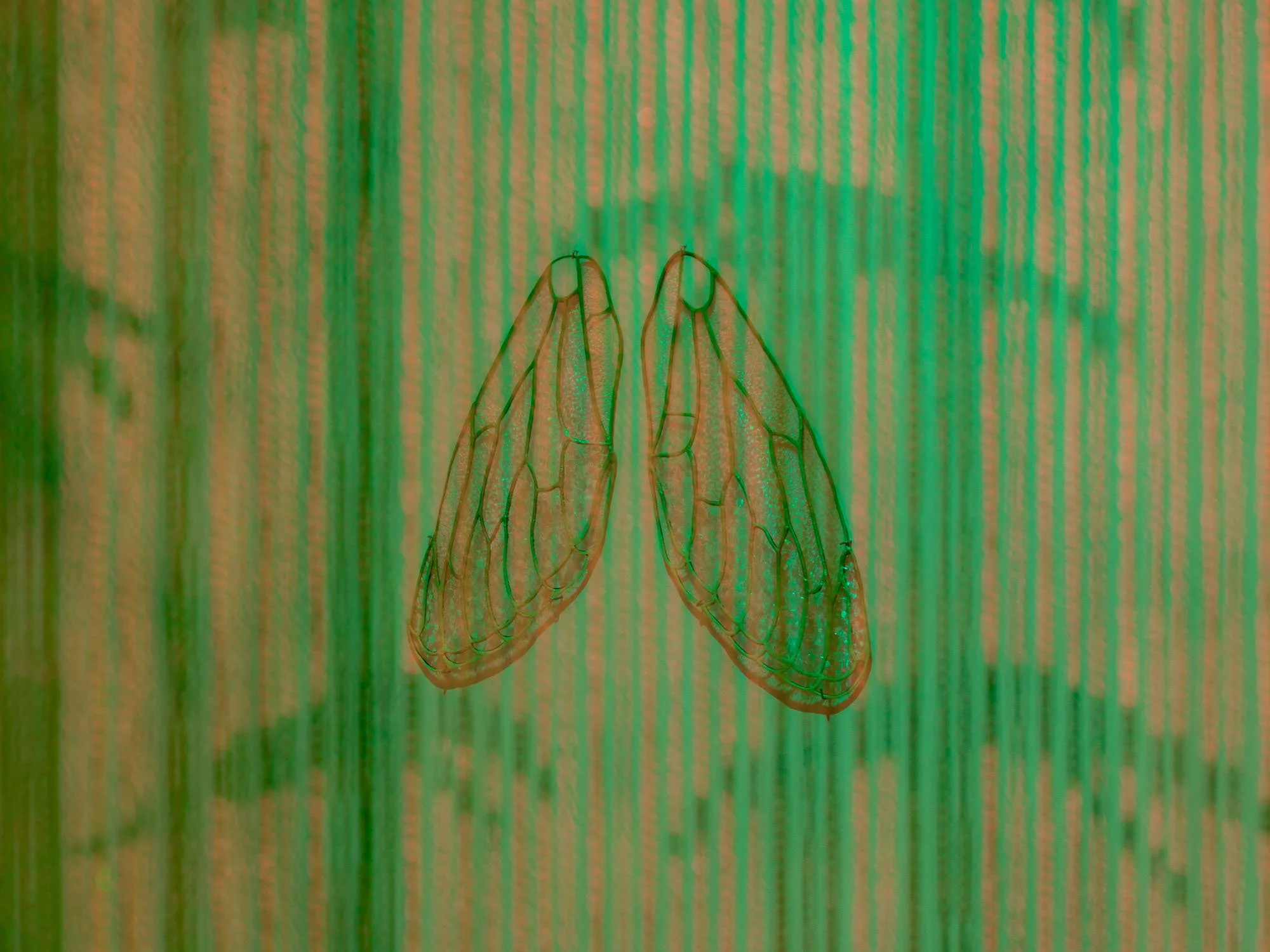
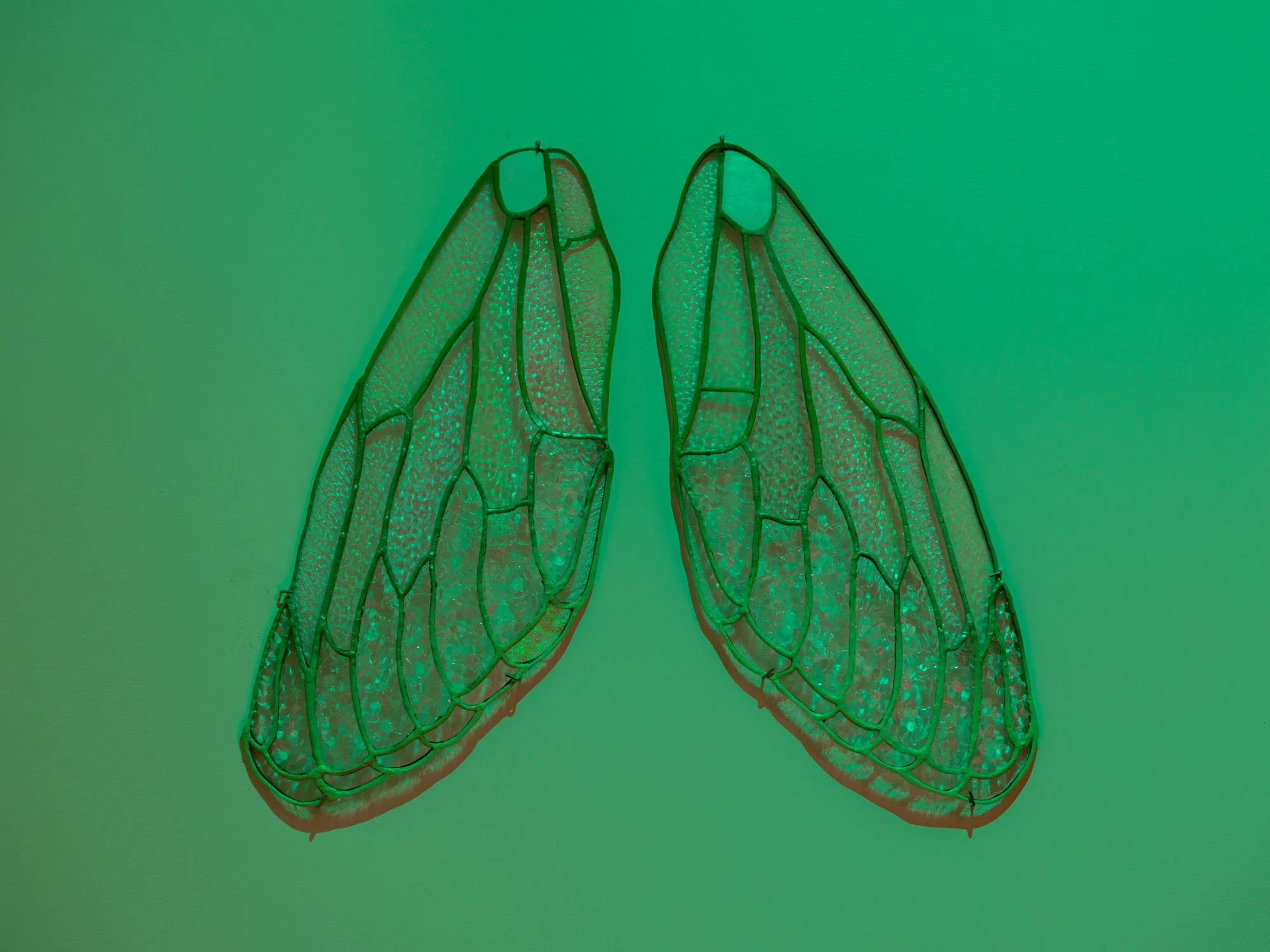
Created as a pair of cicada wings, Shimmer is a study of transparent, translucent, and opaque surfaces inspired by the natural world of insects. Often associated with rebirth in many cultures, the cicada becomes a point of departure for examining how material and symbolic surfaces and bodies evade fixed interpretation. Drawing from Roland Barthes’ notion of the “shimmer”, the work considers the moment when meaning flickers—when light, texture, and perception destabilize certainty and invite a continual re-seeing. Shimmer marks a transition in Zhang’s practice toward exploring opacity, shine, diffraction and light as both a material, and conceptual condition.
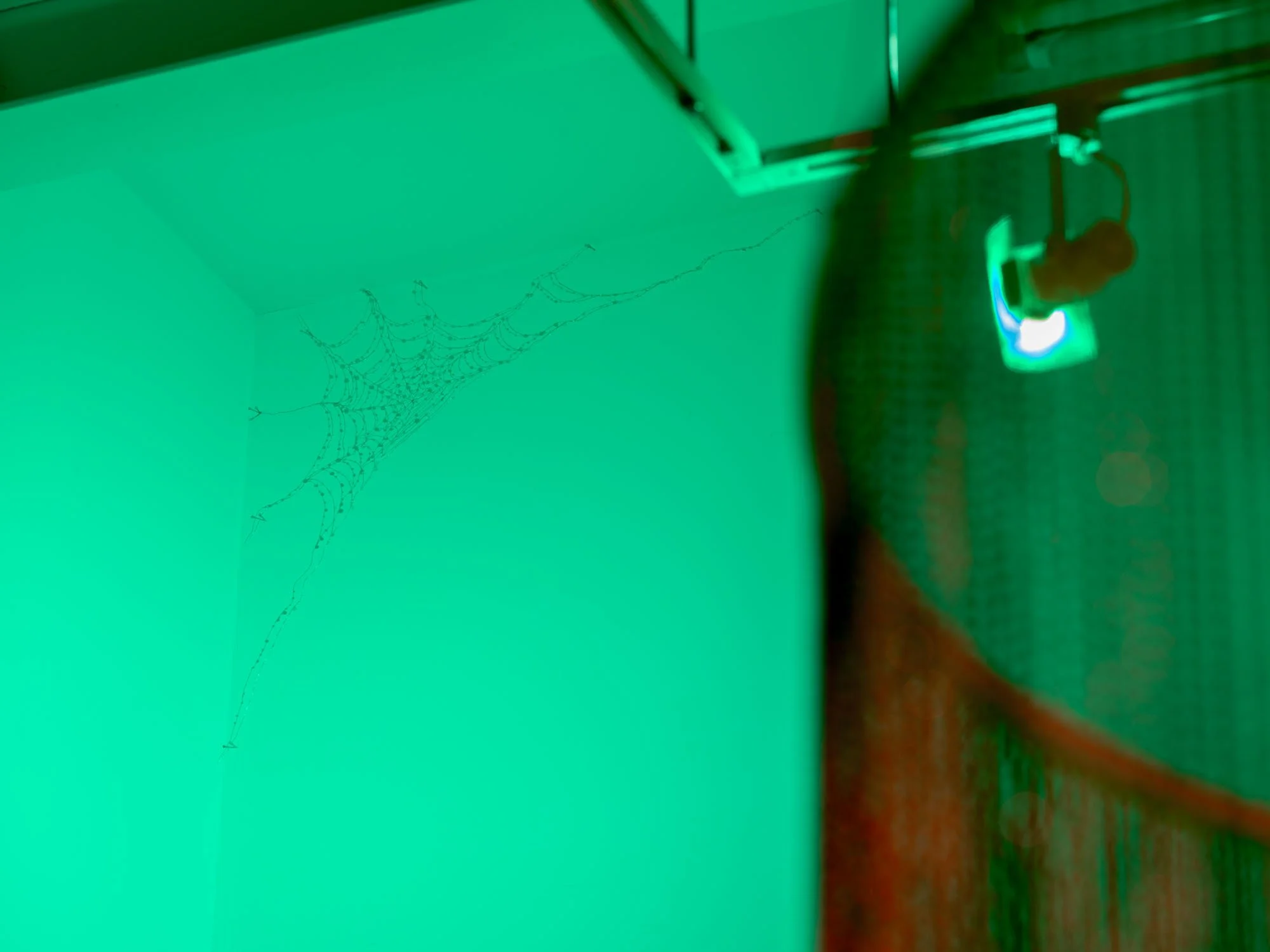
Top Coat continues Zhang’s exploration of elusive surfaces through the motif of the spider web. Nearly invisible, the web is rendered with layers of nail gel and resin that mimic the glimmer of water, transforming a fragile structure into a glistening, ornamental net. In this work, Zhang examines decorative surfaces and practices of adornment as strategies for navigating the boundaries between visibility and invisibility—how surfaces can both conceal and reveal, protect and expose, repulse and attract. The web offers a meditation on how practices of adornment, shine and artifice operate as a strategy to illude fixity.
Shellie Zhang is a multidisciplinary artist based in Toronto and New Haven. Through a diverse range of media, Zhang explores how histories of translation, migration, and memory leave traces and impressions. Her work examines the processes of integration and assimilation, the ways culture is learned, sustained, and negotiated, how manifestations of these ideas relate to lived experiences and how symbols and icons are remembered and preserved. Zhang’s recent work investigates the surface as a charged site where connections between the decorative, ornamentation, cinematic surfaces, and skin are projected, learned, and inherited. Working across materials such as light, metal, found objects, and glass, she explores how these surfaces operate as perceptual thresholds, embed- ded with anxieties around gender, race, and sexuality beneath their ornate veneers. Drawing on symbols from both natural and urban worlds, she examines how decorative surfaces carry the potential to transform and metamorphose from their encrusted histories.
Zhang has exhibited at venues including Asian Art Initiative (Philadelphia) and the Institute of Contemporary Art San Diego. In 2026, she received her MFA in Sculpture at the Yale School of Art. She is a recipient of grants such as the Toronto Arts Council’s Visual Projects grant, the Ontario Arts Council’s Visual Artists Creation Grant and the Canada Council’s Project Grant to Visual Artists. Zhang was an Artist-in-Residence at the Art Gallery of Ontario (2017), received the Toronto Friends of the Visual Arts Artist Award (2021), and was longlisted for the Sobey Art Award (2025). Her work is in public collections such as the Robert McLaughlin Gallery and the McMaster Museum of Art. Her work has been published in Frieze, Canadian Art, the Toronto Star, Blackflash Magazine, CBC Arts, and C Magazine. Zhang is a founding board member of the Toronto Chinatown Land Trust.